
Compare Montgomery County Property Value Types
Every value tells a different story. The County Appraiser sets real property values each January 1. The Treasurer then takes that assessed figure into the tax system. A sale price is different. By contrast, it reflects what a buyer and seller agreed on at one moment in time. Knowing which number you hold helps you read Montgomery County property records correctly.
| Value | What It Is | Where |
|---|---|---|
| Appraised market value | The Appraiser's estimate for most real property | Appraiser record or account fields |
| Assessment amount | The base after the Kansas class ratio is applied | Assessment and tax records |
| Sale consideration | A dated amount tied to one transfer, when shown | Recorded deed and sale records |
| Land and improvement values | Components of the property valuation | Official ACT account detail |
The appraised figure and its ratio-derived amount form the public valuation record for a parcel. A recorded transfer price stands as one dated market fact. A current professional appraisal serves a different purpose entirely. It reflects a private analysis rather than the county tax roll.
The official ACT account-detail route shows where the county tax interface groups identity, legal-description, value, exemption, statement, and payment tools for a single account.
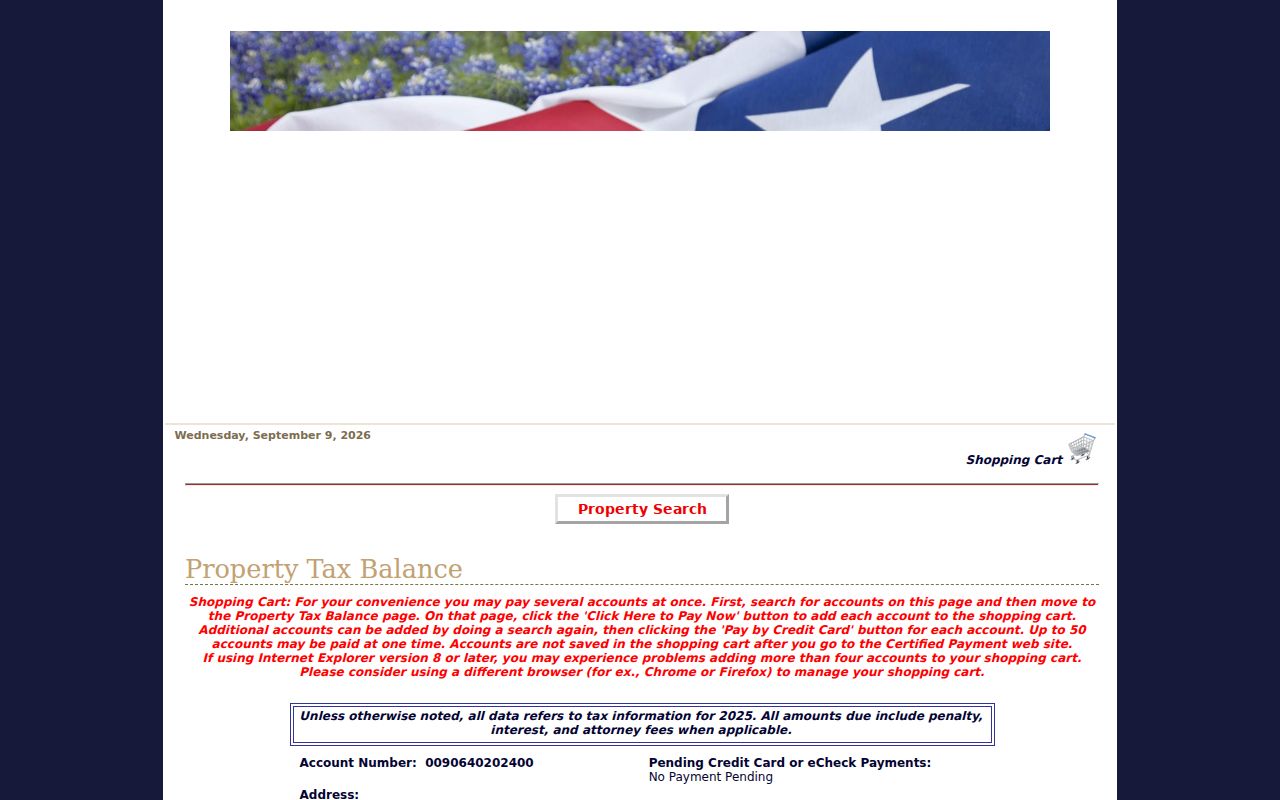
Copy each displayed label and year exactly. The layout proves which fields exist; it is not permission to carry one parcel's numbers over to a different property.
Kansas Ratios Shape Montgomery County Assessed Value
Kansas law applies class-based ratios to appraised market or use value. Residential real property is assessed at 11.5%. Commercial and industrial real property is assessed at 25%. Vacant lots carry 12%, and qualifying agricultural land is assessed at 30% of agricultural use value. The ratio is not the tax rate. Agricultural land follows productivity and use-value rules rather than an ordinary market-value premise, so check the class on the property record before comparing two assessment amounts.
Read Montgomery County Property Value Fields Apart
The county's ACT account-detail layout can display Gross Value, Land Value, Improvement Value, Capped Value, Agricultural Value, and Exemptions. Each field belongs to its own parcel, class, and year.
| Field | Check | Use |
|---|---|---|
| Land value | Year and parcel | Site component |
| Improvement value | Building record | Improvement component |
| Agricultural value | Classification | Use-value context |
| Exemptions | Displayed exemption | Taxable treatment context |
Account details in the tax interface can sometimes look unfamiliar. No owner, address, or dollar figure from a sample account should be treated as a Montgomery County fact.
Check a Montgomery County Assessed Value
Start at the county's official Parcel Search page. The direct parcel portal is not always reachable, so the ACT tax route and the Appraiser's office serve as practical fallbacks.
- Search by owner, address, statement number, or tax ID where the official ACT route offers those keys.
- Confirm account number, site address, and legal description.
- Record the year and each visible gross, land, improvement, capped, agricultural, or exemption field.
- Confirm unclear fields with the Appraiser at 620-330-1050 or appraisalrequest@mgcountyks.org.
- Assessment amount
- The figure after the class ratio is applied.
- Market or appraised value
- The Appraiser's estimate for the valuation date.
- Assessment ratio
- The class percentage converting appraised value to the assessment base.
- Reassessment
- The annual county review of real-property value.
January 1 Anchors Montgomery County Property Value
January 1 anchors the whole valuation cycle. The Appraiser values real property as of that date each year. An addition, demolition, repair, corrected description, or class change may affect one cycle differently from a later sale or the property's present condition.
For ordinary taxable real property, the county describes market value as an open-market exchange between well-informed parties. These parties act without undue pressure. That premise is a standard of measurement, not a guaranteed sale price.
Put the 2026 Montgomery County Study in Context
The Montgomery County Appraiser reported an inflationary trend of about 3% overall for residential, commercial, and vacant land in its 2026 study. Not every parcel moves 3%. Individual values differ with improvements, corrected descriptions, neighborhood sales, classification, and equalization. Compare each parcel's own record across years.
Match Sale Evidence to Montgomery County Valuation
The county verifies sales during appraisal work. One transaction still does not set appraised value by itself. Terms, date, condition, and rights conveyed all affect its usefulness. So does whether it was an open-market exchange. Verify deed parties through the Register of Deeds. Match the legal description too. A mortgage amount, listing price, tax due, and deed consideration are not interchangeable. Compare any verified sale against the correct January 1 valuation year.
Check Classification Before Comparing Montgomery County Property Values
Two nearby parcels can follow different valuation rules. Residential, commercial, vacant, and agricultural classes carry different Kansas assessment ratios. Qualifying agricultural land starts from use value. A raw assessed-value comparison without classification can misstate the relationship between two properties. Record the class, year, land and improvement components, exemptions, and legal description for each account. If the tax interface shows Gross, Capped, or Agricultural Value without explanation, ask the Appraiser which field controls. Ask why, too. That answer beats guesswork. Never apply the residential ratio to every parcel. Never reverse-engineer a Montgomery County property value from tax due.
Request Montgomery County Value Records Offline
The Appraiser and GIS offices sit on the first floor at 217 E Myrtle Street in Independence. Ask for the property record card. Also request the land and improvement breakdown, classification, year, and comparable-sale material where releasable. Call first. GIS staff may be away.
For an existing non-exempt record not supplied through the normal route, the county KORA form accepts a narrow request and desired format. State the parcel key, legal description, record type, and date range. The County Clerk supplies an actual-cost estimate.
Date every copy and note the assessment year. If a field is unclear, ask whether it reflects appraised market value, agricultural use value, assessed value, a cap, or an exemption; that question keeps a label from carrying the wrong meaning into a comparison.
Build a Montgomery County Value Evidence File
Montgomery County appeal guidance points to one main task: build an evidence file before you argue a value. Start with the Appraiser's own records. Then gather an independent appraisal, recent comparable sales, current listings, photographs, repair estimates, and written figures from a real-estate professional. Each item tests the county's description and its valuation premise. None of them guarantees a winning outcome.
Organize the file by valuation year. Keep the notice, the property record card, photographs, dated estimates, and comparable-sale details in one place. The Appraiser publishes no Montgomery-specific protest deadline, form, filing method, or hearing calendar, so confirm current procedure with that office rather than assuming a date. Ask which year, classification, and property characteristics control the disputed value before picking comparable evidence.
The Appraiser takes calls at 620-330-1050, faxes at 620-330-1117, and email at appraisalrequest@mgcountyks.org, Monday through Friday, 8 a.m. to 5 p.m. Label every supporting item with its source and effective date. A comparable sale, a repair estimate, a photograph, and a January 1 property value each capture a different fact. Preserving those distinctions keeps the file useful after the next annual valuation cycle.
Compare Montgomery County Values by Year
A sound year-to-year comparison holds the parcel, class, and valuation date constant. Start with the same account and legal description. Each year, record the land component, the improvement component, the gross or appraised figure, the assessed figure, agricultural use value, any cap, and any exemption. Include a figure only when the official account displays it. A blank field stays blank. Never convert it to zero or carry it forward from another year.
Next, look at property record changes that could explain movement. The Appraiser cites improvements, corrected descriptions, neighborhood sales, classification, and equalization as factors. A new structure or corrected square footage hits the record differently. A countywide market trend is another matter. Agricultural classification shifts the premise too. Qualifying land is valued on use rather than market.
Finally, match any recorded sale to the right assessment cycle. A deed recorded after January 1 can offer later market evidence. It does not touch the value fixed for that earlier date. Confirm the transfer and legal description with the Register of Deeds. If a number stays unclear, request the record card or supporting material from the Appraiser. You can ask by phone, email, or an office visit. Treat the tax portal label as a label, not a private appraisal.
Know What Montgomery County Property Value Cannot Prove
An assessment amount proves less than people assume. It does not establish physical condition, a surveyed boundary, clear title, development rights, or today's sale price, and an exemption can change tax treatment without changing the market evidence itself.
Value vs price. Montgomery County assessed value supports taxation; it is not a current sale-price opinion or professional appraisal.
Bills, payments, exemptions, and appeals raise questions beyond what the value numbers mean. For those, consult the Montgomery County property tax records guide.