
Check the Montgomery County Owner-of-Record Card
The county maintains an official public Parcel Search landing page. The linked portal can go down at times, though. Any owner-of-record card works best as a checklist of the fields worth copying from the correct account.
| Displayed owner | Name or entity currently carried on the parcel or tax account |
|---|---|
| Mailing address | Address used for official notices, not proof of residence |
| Site address | Physical property location |
| Legal description | Land identity used to match the deed |
| Account or tax ID | Key for matching official systems |
| Latest deed reference | Instrument that must be checked with the Register of Deeds |
The ACT tax account screen groups several fields in one place. Owner and mailing address, site address, legal description, and account number typically appear together. A mailing address only shows where notices go. It does not prove who lives there or where the owner resides now. The official ACT account-detail route shows how property identity and mailing information are arranged on a single page. The legal description and account tools sit there too.
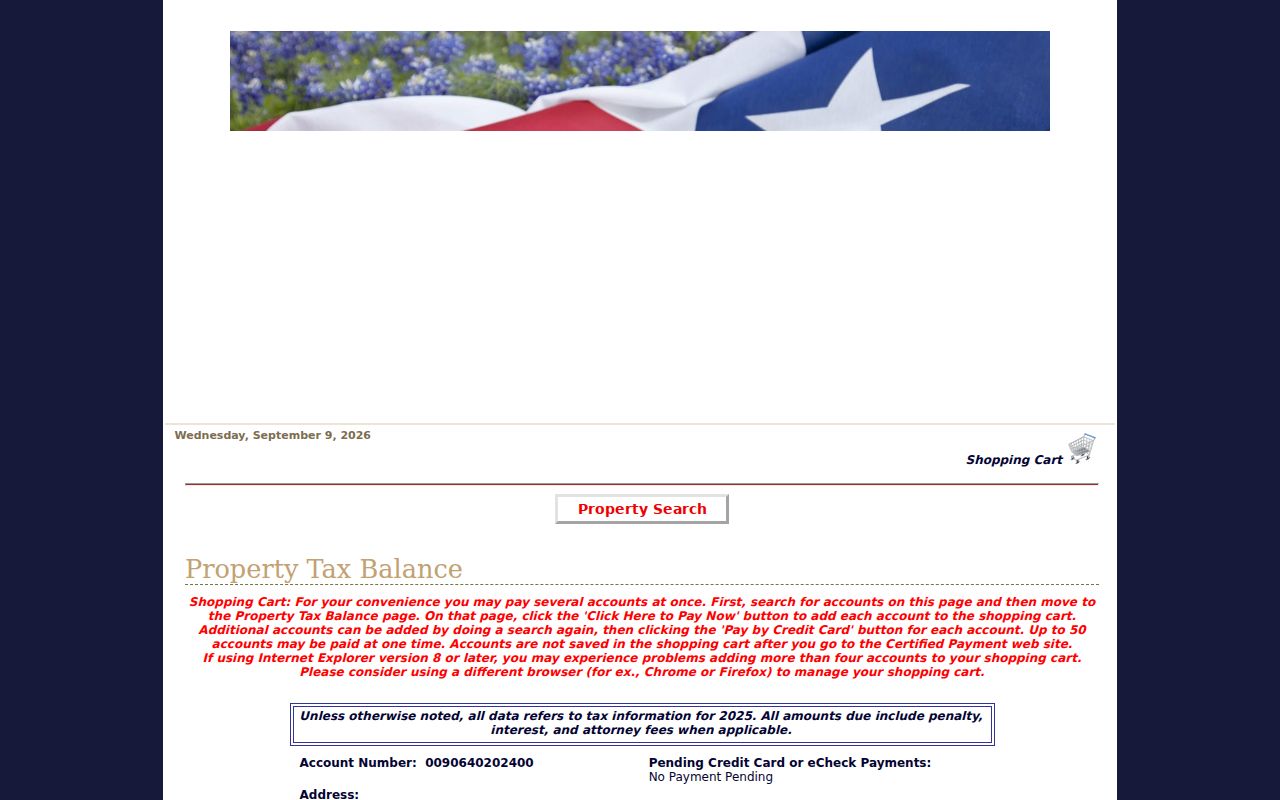
Copy your fields from the correct parcel. A screen layout alone cannot tie a sample account to a specific address. Verify the newest recorded deed separately.
Account for Montgomery County Owner Update Lag
The county describes its parcel data as reliable and current. No daily, weekly, or monthly refresh interval is published, however. A deed's recording date marks when the instrument entered the record, not when the Appraiser updates its owner display. Expect some lag between the two.
Current means confirmed. When records differ, ask the Appraiser for the roll date and the Register of Deeds for the newest recorded conveyance.
Keep the access date with any result you save. That simple note distinguishes what the system displayed on a given day from any change in ownership that came later.
Reach the Montgomery County Owner Offices
Start at the county Parcel Search landing page. If the portal fails, the Appraiser can help directly. Call 620-330-1050, email appraisalrequest@mgcountyks.org, or visit the courthouse first floor at 217 E Myrtle Street in Independence. Deed confirmation sits with the Register of Deeds on the second floor. That office takes visits, calls at 620-330-1140, faxes at 620-330-1144, email to mpcalhoun@mgcountyks.org, and mail to PO Box 647. Bring the address, parcel key, legal description, known owner, and approximate transfer date.
Match a Montgomery County Current Owner Across Accounts
Tax and appraisal records cover the same land. They serve different administrative purposes. So match account number, site address, legal description, assessment year, and any parcel key before trusting either name. A shared surname or a similar street number will not settle the question. Neighboring lots or multiple tracts can trip up either clue.
The ACT account links property identity to tax tools. But it is not the county parcel application. Ask the Appraiser which dated roll supports the name. Ask the Register of Deeds whether the newest grantee matches. Those two custodians hold the authoritative answers. Checking with both supports a careful Montgomery County current owner conclusion.
Verify the Montgomery County Current Owner
Real confirmation ties the assessment name to the newest deed affecting the exact legal description. Name similarity alone proves nothing.
- Locate the parcel by site address or official account key and copy the legal description.
- Record the displayed owner, mailing address, and access date without treating the mail address as occupancy proof.
- Ask the Register of Deeds for the newest deed matching that legal description and compare grantee names.
- If an entity is named, check its exact legal name through the Kansas Secretary of State Business Entity Search.
- Resolve a mismatch by asking when the Appraiser roll was updated and whether a later instrument exists.
- Owner of record
- The party currently carried in the public ownership record.
- Vesting
- The way the deed places title in an individual, multiple parties, trust, or entity.
- Registered agent
- The official contact listed for a business entity, not necessarily the property owner as an individual.
- Legal description
- The land description used to match records when addresses vary.
Verify a Montgomery County Entity Owner
Entity owners appear often in Montgomery County deeds. A deed or assessment account may name a corporation or an LLC rather than a person. Search the exact entity name in the Kansas Secretary of State Business Entity Search, noting the status and registered agent shown. The business record identifies the legal entity. It also gives a formal contact. It does not let you swap the deed grantee for a member, employee, or agent.
Trust and estate names need the same care. The controlling deed, affidavit, or probate matter determines how the interest actually passed.
Match Montgomery County Deed Vesting Exactly
The Register of Deeds records deeds, mortgages, releases, plats, and liens. Powers of attorney and other instruments go through the office too. Only a conveyance confirms a change in ownership. A lien is not a sale either. When comparing documents, check grantee spelling, execution and recording dates, document type, book/page or instrument number, and the complete legal description. Read the attachments and exhibits too.
Some transactions need more than public records. Professional title work goes deeper than this kind of check. Before ordering copies, ask whether exhibits are included with the main image. Also decide whether a plain or certified copy is needed. The county fee page lists recording charges. Copy procedures and current costs should be confirmed first.
Montgomery County Mailing Addresses Have Limits
Kansas Safe at Home protects qualifying victims. It provides substitute legal addresses that government agencies accept. A public mailing field can therefore be a notice address, an entity address, or a protected substitute rather than someone's physical location. Kansas law also restricts unlawful commercial use of names and addresses taken from public records. Keep parcel facts and record references. Minimize personal data, and never republish sensitive numbers that might surface in an old image.
Date Each Montgomery County Owner Check
An owner check is only as fresh as its sources. Record three dates before you rely on any name. Note the day you viewed the parcel or tax account. Note the assessment year on the roll. Note the recording date of the newest deed from the Register of Deeds. Each date answers a different question. The assessment year identifies the roll. The access date fixes what the system displayed. The recording stamp then places the conveyance in the official county record.
Estates and court files can complicate the sequence. Probate and civil matters for Montgomery County sit with the 14th Judicial District. A pending case may explain why a deed has not yet appeared. It may also explain why an interest passed through an estate. Treat court search results as leads. They never substitute for the official file. District Court records follow the court's own request process. They do not use the county's general KORA form.
What if the parcel name and the latest deed still conflict? Ask each custodian a narrow question. Provide the legal description, the deed recording reference, and the parcel key. Ask the Appraiser which roll date controls the name. Then ask the Register of Deeds whether a later conveyance, affidavit, or correction affects that land. That discipline keeps your Montgomery County current owner conclusion tied to records you can identify. It replaces a guessed update schedule.
The Appraiser's office is open Monday through Friday, 8 a.m. to 5 p.m. Its fax number is 620-330-1117. For a remote request, say whether you need the current property card. Say if you need a prior assessment year or an explanation of a displayed field. If an existing non-exempt record is not offered through the ordinary office channel, Montgomery County's KORA form allows a description, desired format, and electronic signature. The County Clerk supplies an actual-cost estimate.
Save every custodian response with the parcel key and legal description. That trail shows which Montgomery County source was consulted. It also prevents confusion between a tax-account date, an assessment year, and a deed recording date.
Contact a Montgomery County Property Owner Lawfully
Use the public mailing address only as a dated record field. A boundary, purchase, estate, or maintenance matter gives you a legitimate reason to write. State the parcel and the property issue plainly. The record may be stale or protected. If so, do not press the county office to disclose exempt information.
Lawful use. Public owner information supports legitimate property diligence; never use it to target, intimidate, stalk, or harass anyone.
Need the broader address-to-owner route? The who owns a property in Montgomery County method page explains the initial lookup, while the focus here stays on checking who owns now.